
Am I important to anyone? How I healed my anxious attachment style
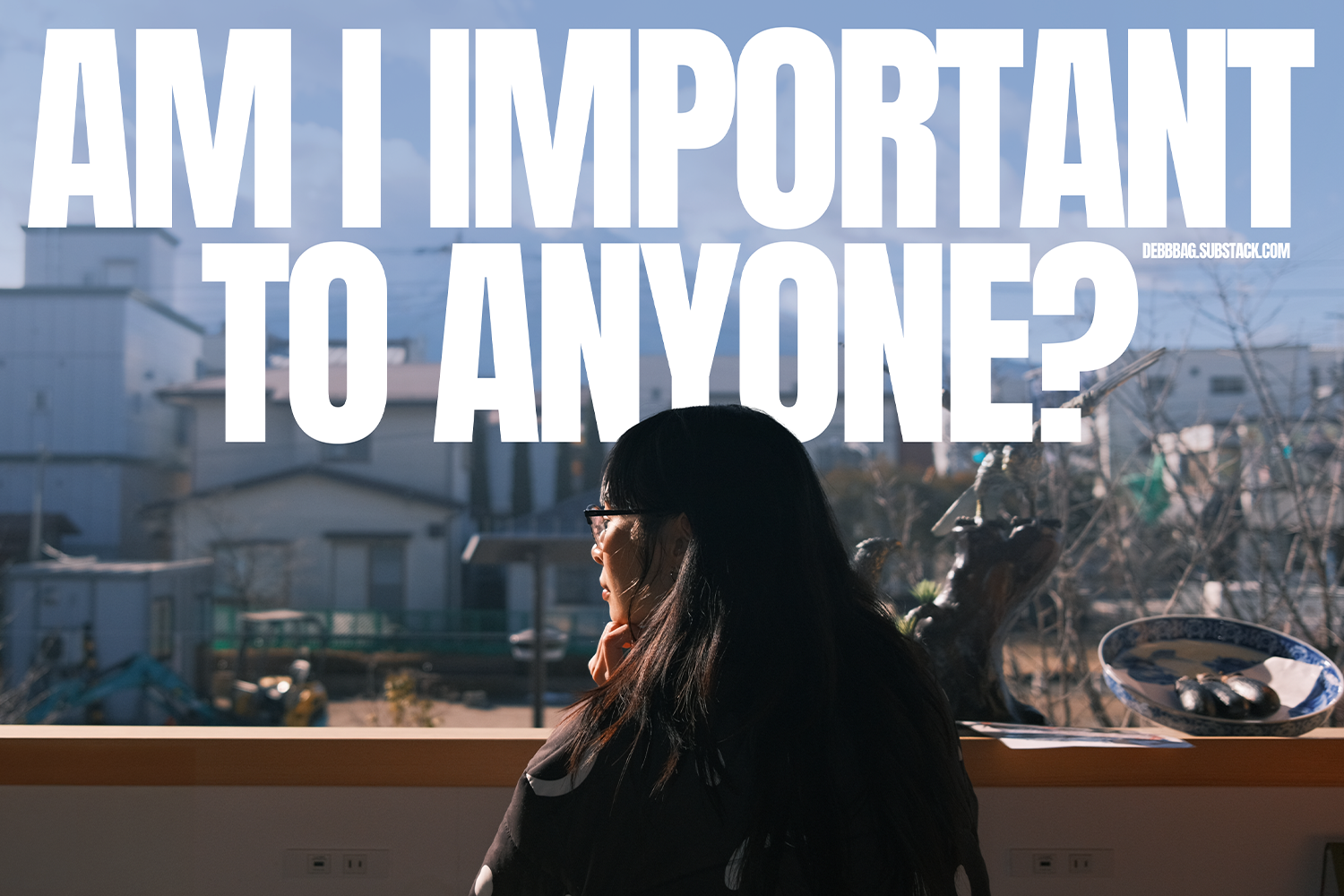
If my confidence was at 70% in 2024, it shot up to 90% towards the latter half of the 2025. And it came from one big question: Am I important to anyone?
Objectively, the answer is yes – I am important to many people. But no matter how much I proved that to myself, my body never completely believed it (until this year of course, when I’ve actually healed. The journey starts heavy, and then ends on a light note, literally!).
For the past 9 years, I had unconsciously cultivated a severe anxious attachment style, largely triggered by romantic relationships. Anxious attachment is defined as “an insecure attachment style marked by a deep need for closeness and constant reassurance, combined with a heightened sensitivity to any shifts in the relationship. Even small changes can feel like a threat to the bond.”
Research and trends would pinpoint this as a development from my childhood, or my relationship with my parents – but I never felt insecure in any relationships I made when I was younger, nor did I feel like I couldn’t rely on my parents. I always knew my anxious attachment truly developed with my first real relationship. (NB: I will be using they/them pronouns to keep it neutral).
I remember being constantly anxious and disappointed by my (then) partner’s flakiness, feeling endlessly rejected by their lack of effort, and squashing my needs because I didn’t want to push them away even more. They always seemed dissatisfied with their life – and constantly thought the grass was greener elsewhere. It would be a lie to say I wasn’t affected by this. I never felt secure with them – they were always searching for a better life somewhere else, and didn’t seem to care if I was there or not.
The constant fear of being disappointed can really wear on you over time – like a death by a thousand cuts. You wonder to yourself, “I really hope they show up for me today, but they probably won’t.” Nevertheless, there’s still a part of you that hopes things might be different this time. Sometimes they even say yes, only to bail at the last minute, and ask you “Is it okay if I don’t go?”. You set the standards so low, and yet they still aren’t capable of ever reaching it. You eventually get used to the sense of dread you feel when you want to make plans with them. Over time, it becomes so easy for you to associate their lack of effort with your own self worth.
As the disappointments started to build over the years, I started to subconsciously accept this narrative; “They aren’t showing up for me because I’m not worthy of showing up for. They would do it for someone else they actually cared about. I’m not important enough.”
Eventually, I began to blame myself for not being worthy of better treatment. “What could I have done to make this person treat me better? What is it about me that makes them not care?”
When I think about that time in my life, I always think about the analogy with the boiling frog. You don’t drop a frog into hot water – otherwise it will jump out immediately. Instead, you put the frog in cold water and then slowly turn the heat up. It will acclimate to the incremental changes until it’s too late and it gets too hot and dies. I felt like that boiling frog, my anxiety started to rise over time and I slowly accepted it as a normal part of me.
Over the next few years (well after that relationship was over), my anxious attachment did get triggered several times, and it became a problem when this anxiety started bleeding out into non-romantic relationships too.
For dating, I’d get overly anxious if I’d sense a change in pace, and I’d always want to speed up the journey to emotional intimacy, even if I didn’t know if I liked them yet. And when it came to new friendships, if I had any inkling of flakiness from the other person, I’d become anxious again and start to go down the same thought process that I had adopted a few years prior, “They aren’t showing up for me because I’m not worthy of showing up for. They would do it for someone else they actually cared about. I’m not important enough.”
At my most vulnerable times, I’d start questioning every relationship in my life (even my ride-or-dies!). I’d think to myself “Am I important to anyone? Am I even worth caring about?”
This is when I knew my anxious attachment had gone too far, and my trauma was telling me things that I knew were objectively not true. I knew I had to start fixing it.
Okay, but how did I cure myself of this anxious attachment?
Curing my anxious attachment was not a linear journey, it was a whole series of changes and challenges that came together this year. Many of these issues overlapped with each other, so as soon as I started to solve one problem, everything else started to clear up.
The main epiphany: What if I stopped giving my empathy, time, and presence to people who broke my trust?
The moment I decided to stop giving my energy to people who broke my trust, I started to feel lighter, more confident, and free.
But let’s rewind a bit, to how I got to this epiphany.
After my (then) partner and I broke up, we eventually decided to stay friends. They were still someone I got along with (we started off as friends, and also shared mutual friends as well). Everything was fine, and I also only saw them twice a year so I wasn’t giving them a lot of my time either.
However, I started to notice that every time I saw them, there was a part of me that felt compelled to rebel against this friendship, to remind them how badly they treated me during our past relationship. It would come up occasionally as small sassy comments; “Remember when you…”
I would start to hate myself for being so petty, but my inner child couldn’t help itself. In my head, I wanted this friendship to work, but my body kept the score. My body still felt the resentment from the years of disappointment, and it held onto the anxiety because it was the only way it knew how to protect itself.
After a while, I realised that no matter what my ex-partner said – even if they said something to simply be contrary – my deeply buried resentment would interpret their comments as a criticism of my value. Even if they showed up to every event we planned together, there was always a part of me that would brace for disappointment. My body kept the score.
I didn’t know at the time, but trying to build my confidence while being friends with someone who made me feel *the* most worthless in my life put me in a constant state of shame and confusion. My body and mind were conflicting, “How can you learn to respect yourself, when you spend time with someone who constantly reminds you of a time when you didn’t?”
I didn’t want to hold onto this negativity anymore. I didn’t want to be 50 years old and still making petty remarks towards my “friend”. I didn’t want to keep enabling this relationship if it meant I could never move on from my anxious attachment.
I remember sitting on my couch, after an exhausting day, and asking myself… “What if I stopped giving my time and energy to this person who made me feel so worthless? What if… I never saw them again, how would I feel?”
The moment I accepted that I may never see them again, I could feel a literal weight lift off my shoulders. I physically felt lighter. In my 32 years of life, I have never felt a physical catharsis so immediately. That’s when I knew it was the right thing to do. I was unknowingly carrying that negative energy for 9 years, and now I was finally free of it.
I remember riding that high for 2 weeks straight, feeling the most confident I had ever felt. (My body has now acclimated to the new confidence, so I feel pretty normal again, albeit way less anxious than before).
When the trust is broken, or someone has hurt you enough, no amount of growth or redemption on their end will ever heal the resentment you have towards them. Sometimes it’s better to walk away.
* * *
Wow, easy right? Not exactly. This may have been the epiphany, but there was a lot of extra work over the years that led me to this moment.
The media that changed my perspective: Attached and Too Much.
Attached
A few years ago, I read the book Attached by Dr Amir Levine and Rachel S. F. Heller. It was a book that changed my life, and set me on this journey of healing.
I remember reading the book and seeing myself so deeply reflected in it. I felt like I was reading a book about my life. This gave me a sense of reassurance that I wasn’t alone in this, and that these behaviours weren’t particularly unique or notable, if anything – anyone who is put in a situation like mine would develop the same exact behaviours. It was nurture, not nature.
It took me out of an isolated bubble of shame, and made me feel confident that if I had learnt these behaviours, I could unlearn them just as easily. The book also taught me that attachment styles could develop any time, not just from childhood or parenting – which gave me clarity on where to start solving my issues.
Too Much, created by Lena Dunham
I have always been a fan of Girls, and when Lena Dunham announced she had a new show with Netflix, I was seated. Too Much is a show about a woman named Jessica (played by Megan Stalter) who moves to London after a nasty breakup with her boyfriend (Michael Zegen). There, she meets a man named Felix (Will Sharpe), and while their connection and attraction is strong, they spend the series navigating their baggage and differences with each other.
Episode 5 of the series was devastating, and even if you don’t like the series, it’s worth watching for that episode alone. If you’ve ever experienced toxicity in a relationship, it will hit home for you.
Watching the show felt like a wake up call, it made me realise I was carrying so much shame and negativity from small, seemingly innocuous actions. The show reminded me that baggage is something you can carry well after the relationship is over.
The imagery exercise that unlocked everything
When I went back to therapy last year, my psychologist taught me an imagery exercise. The goal of imagery is to go back into your memories, immerse yourself in them again, and pinpoint the feelings and narratives you have adopted from those experiences. You close your eyes and start with a recent memory, one that evoked a significant amount of distress, and relive it with incredible detail. You walk through your feelings and land on a personal “I am...” statement of how you felt in that moment. (e.g. “I am insignificant.”).
Once you’re done with that memory, you go back through your timeline and relive the next memory that comes to mind. You keep doing this until you reach your earliest memory that evokes the same feeling – essentially creating a thread of connected memories that have built the narrative of your psyche today. Each memory needs to have an “I am…” statement – and while each statement can be different, they are often related. (E.g. “I am insignificant, I am ugly, I am stupid.”).
It reveals negative thought processes that may be ingrained in you, and when I did this with my psychologist I remember being surprised by how confronting it was (I was crying non-stop). Having my psychologist there to guide me through the memories, and asking questions to prompt me on my feelings, pushed me to admit things I couldn’t on my own.
I remember trying to say “I feel…” statements instead of “I am…” as a way to protect myself emotionally. I also kept trying to backtrack and claim, “I know logically it isn’t true”. My psychologist insisted I say only “I am…” statements because it was a more powerful admission. See the difference below:
“I feel ugly.” or “I feel ugly, but I know I’m really not.”
vs
“I am ugly.”
When an “I am…” statement is said out loud, it can be painful, embarrassing, and confronting when it rings true. It’s incredibly hard to admit too, and that’s when you know you’re making progress. After going through a string of memories, my psychologist would go back with me to challenge and heal the memories from the earliest one.
I remember doing this exercise and looking back on a memory that I felt was my breaking point in the relationship. I felt so humiliated, pathetic, and abandoned in that memory, and all the disappointments had come to the surface.
“I am worthless.”
“I am not important enough.”
When I landed on these statements, I felt an immense amount of pain and uneasiness, but also relief – I had finally confronted how much that moment really affected me.
This was the first time I said the words “I am worthless” out loud, and put my true feelings into something tangible. Everything you’ve read at the beginning of this blog was a result of this exercise – the clarity I have now is because of this moment. Eventually, I was able to go back to that memory, and challenge the “I am worthless” narrative. Instead of quantifying my self worth through my partner’s poor actions, I disconnected the two, and realised the choices they made were simply incompatible with the relationship I wanted to build with someone (I dedicate a lot of effort to any relationship, and it’s not wrong to expect the same in return). I accepted that how my partner acted was out of my control, and they just weren’t the person for me. I wasn’t the person for them either.
This was a big moment of growth for me, but I knew if I wanted to completely heal, I needed to dig deeper and address other behaviours that got me to this point.
Things I can actually blame my childhood and personality for, and how I solved it
Even though I can pinpoint where this anxious attachment truly manifested, it would be naive to deny that my childhood and personality didn’t have a play in this. I am a natural people pleaser, I get a lot of satisfaction from external achievements and validation, and I am very Type A. If I didn’t have these traits, I’d probably be less susceptible to adopting an anxious attachment style.
Desire for external validation
Being a daughter of immigrants definitely shaped who I am today. I was taught from a young age that I would have to try harder than most kids, knowing I was disadvantaged in 2 ways (being a woman, and being Asian). So I thrived on external validation – through school awards, winning competitions, and high grades. This is how I could prove I was succeeding.
When it came to my anxiety, asking for reassurance felt like the best way to know I was doing well. Someone else’s approval did matter – because I was taught it was the only way to thrive.
As I’ve grown older, I’ve learnt that having external validation will only get you so far. Even if you have many people praising you, or a partner reassuring you, if you don’t feel good about yourself internally, it wouldn’t matter. I’ve built my confidence over the last few years, listening to my gut, and knowing the only thing that matters is my own personal opinion.
A desire to help others
I like helping people (I got this from my Dad), and in my community, it’s natural to be generous, thoughtful, and repay any kindness to people who have helped me in the past (I got this from my Mum). I’m incredibly lucky that my main circle is very reciprocal (a lot of us grew up the same way).
It was only until I met people outside of this bubble of generosity, that I realised not everyone is naturally mindful of reciprocation. People would see my generosity and attention as something they were entitled to, without any need to give back. (I don’t have the expectation that everything I do must be reciprocated, but if you’re in a relationship where someone just takes from you constantly, it will be exhausting and anxiety-inducing to maintain in the long run).
It took me a while to figure out who was a “taker”. I used to think that if I rescinded my generosity from these “takers”, I was being selfish and calculating. This year I learnt it’s okay to want to be in a relationship which is reciprocal (crazy huh??) and setting a better standard for myself would benefit and enrich my relationship with others – where there is no resentment.
People pleasing
People pleasing was a big part of my life until this year (I wrote about it in a blog). I used to willingly break my own boundaries to make others feel better, and that contributed a lot to my anxious attachment. People pleasing was my feeble attempt to gain security – I was doing the absolute most to try to make someone like me.
Eventually, I realised that my people pleasing was not truly helping others or myself, so I snapped myself out of those unhealthy behaviours. I don’t over extend myself to please anyone else anymore, and my anxiety has decreased significantly as a result.
My savior complex
I used to feel responsible for other people’s happiness, especially when they were struggling – and this kept me in draining relationships. My savior complex gave me security and purpose in relationships, which masked any anxious attachment I had, while also reinforcing it.
But over the last decade, I learnt that no matter how hard I tried, I can’t save someone else – even if I wanted to and they wanted me to.
Letting go of this part of me has done wonders, and I now only think about whether my relationships are built on mutual joy, respect, and understanding – instead of a desire to “save someone”.
Being Type A, a perfectionist, needing to control all outcomes
I am Type A to a T – I love spreadsheets, I love productivity, and I love being organised. Unfortunately being Type A means “going with the flow” is not something that comes naturally to me.
Perfectionism goes hand in hand with anxiety, and I would try to control outcomes as much as I could to ease my discomfort with the unknown. This year, I read Hidden Potential and The Pursuit of Perfect, and both books explain the need to feel uncomfortable in order to challenge yourself and grow. In the past three months, I’ve been adopting a less controlled approach to life and relationships, and accepting this discomfort has been surprisingly freeing.
I stopped trying to figure out why people hurt me
Before this year, any time anyone did anything to hurt me or dismiss me, I would spend hours trying to understand why they acted the way they did. I always needed a reason – it was a way for me to cope with all the uncertainty, and to give me some closure. If I knew the reason, maybe it would be something I could move on from.
This year, I decided that I didn’t need to go deep into their rationale. Even if they didn’t have bad intentions, the result was the same – they still hurt me. I started questioning things at surface level instead – are they doing something to me that makes me feel good or bad? Being mistreated was enough for me to walk away from a situation, and listening to my feelings first gave me so much more confidence in myself.
The most important people in your life will allow you to be your worst self around them, and not bring out the worst parts of you
For the longest time, I thought that because I was comfortable being frustrated, angry, and insecure with my partner – it meant that I was comfortable “being my worst self” around them. It was in fact, not true, because a lot of the distress I felt was because of them, and I was my most anxious in their presence.
I remember seeing my close friends and family during the peak of my relationship problems, and immediately feeling happy that I could be my unfiltered self with them. I felt comfort and security in knowing that no matter what I expressed, they would always accept me.
There is a difference – you should be able to express your hardships and vulnerabilities with someone openly, not have them be the cause of it.
Incremental things add up and will wear on you, what is the shit sandwich you’re willing to eat?
When it comes to any real relationship, there can be downsides. You may have a loyal friend that’s always an hour late, a best friend that may take 3-7 business days to get back to you, or someone you adore that’s terrible to travel with. We often have to grapple with the endless amount of flaws in the people we love and care about – and it’s called the “shit sandwich”.
If this journey of anxious attachment has taught me anything, negative incremental changes can wear on you over time, and change you for the worse. Life isn’t perfect, and we often sacrifice comfort to achieve something better. We often accept minor inconveniences to have access to something exciting and fun. Life is full of negotiations, and when it comes to relationships, what is the thing you’re willing to tolerate to have what you want? What is the shit sandwich you’re willing to eat? And are you aware of what that sacrifice means for you?
I used to think that if you gave a lot away, you’d get a lot back (but that isn’t always true)
Anxious attachment is all about overcompensation – giving a lot of attention, asking for constant reassurance, in order to receive anything back.
In life, many things only grow when you give it attention and focus, and I naively thought that by giving more of myself, I’d always get more back. It may work with developing a skill, but it’s not exactly the same for relationships.
Trust and emotional intimacy is earned over time through action and experience, and you can’t rush that. Forcing closeness is suffocating, and will push people away. It needs to be organic and earned.
If you’re going to minimise the importance of something, everyone else will too
A few years ago, I remember feeling insecure when people in the group chat wouldn’t respond to my invites with enthusiasm (or even respond at all). I remember when I talked to my psychologist about it, she said, “The way you phrased your invite makes it sound like the event wasn’t that important, so people won’t feel like it’s important enough to attend or even respond.”
That concept floored me at the time – it seemed so obvious. Of course. Saying “btw I’m going to this thing on Saturday, come if you’d like” is way less impactful than, “I’m going to this event on Saturday, I’d love for you to come if you’re free!”
I knew why I always went with the former approach – I never wanted to ask for things with my full chest because I didn’t want to scare away people with my needs. It was self sabotage – if I didn’t make it a big deal, and people ignored or rejected me, I could tell myself that I didn’t really care if anyone came anyway.
It was a toxic cycle… putting in half-hearted effort to avoid true rejection, getting half-hearted results, feeling insecure and rejected anyway, and then deciding to put in even less effort next time to avoid further rejection.
Nowadays, if something is important to me, I will express it – and I don’t downplay it to appear “nonchalant”. If people show up, I am always grateful, and if they don’t… it is what it is, and it doesn’t bother me anymore. I am just being my authentic self, and that’s the best I can do. Being open about my needs will always attract the right people, and scare away the wrong ones.
* * *
It was a long journey for me to get to this point, and the journey still ongoing. To say I’m completely healed would be naive, but I don’t experience that deep-seated fear anymore. I feel more calm and confident.
I’m getting used to feeling discomfort as well, but I now know the difference between something that will help me grow, versus something that wears down my self esteem. I know to not repeat the same mistakes I did in the past, but if I do, I’ll give myself grace and allow myself to learn again.